
Social media is flooded with post-surgery selfies showing puffy cheeks and soup-only diets. Your coworker still talks about the "worst week of my life." But here's what gets lost in all these cautionary tales: millions of people keep their wisdom teeth forever without a single problem.
The crucial question is figuring out whether you're among those who need extraction—or those who can safely ignore the hype.
What Exactly Are These Late Bloomers?
Wisdom teeth are your third and final set of molars. They typically emerge between ages 17 and 25, long after your other adult teeth have settled into place. The name suggests they appear when you've accumulated enough wisdom to handle adulthood—though anyone who's been 20 knows that's debatable.
The core issue is anatomical. Modern human jaws are smaller than those of our ancestors. Early humans needed these extra grinders to process tough, raw vegetation and meat. Our cooking techniques and dietary changes have made them obsolete, but evolution works slowly.
Red Flags That Signal Trouble
Persistent Aching
Pain originating from your wisdom teeth shouldn't be dismissed. It might manifest as a constant background throb or sudden, stabbing sensations. Some patients report feeling like their jaw is under pressure, while others notice sharp twinges when eating.
Your body uses pain as communication. Listen to what it's telling you.
Trapped Teeth
Impaction occurs when a wisdom tooth can't break through the gum line normally. It might be tilted at an awkward angle, pushing against its neighbors, or completely submerged beneath the tissue.
These stuck teeth create a cascade of problems. They can damage adjacent teeth, harbor bacteria in hard-to-clean areas, and trigger infections that spread quickly.
Chronic Infections
Repeated infections around your wisdom teeth usually mean it's time to consider removal. These episodes, called pericoronitis, happen when debris and bacteria get trapped under the gum flap covering a partially erupted tooth.
Warning signs include noticeable swelling, persistent bad breath, difficulty opening your mouth fully, and painful swallowing.
Misalignment Issues
Sometimes wisdom teeth generate enough force to shift your entire dental arch. This is particularly frustrating if you've previously worn braces. All that time and investment in a straight smile, compromised by teeth that arrive decades late.
A dentist at Clementi can capture detailed images to see whether your wisdom teeth are currently causing—or will soon cause—crowding problems.
Serious Complications
Though rare, wisdom teeth can develop cysts in the surrounding tissue. These fluid-filled sacs gradually destroy jawbone and can compress nearby nerves. Tumors are even less common but remain a possibility.
Consistent dental surveillance catches these conditions before they become severe.
Cases Where Extraction Isn't Necessary
You might be a candidate for keeping your wisdom teeth if:
- They've fully emerged and sit in proper alignment
- You can clean them effectively with regular brushing and flossing
- They cause no discomfort or dental complications
- Your jaw accommodates them without strain
Many people function perfectly well with wisdom teeth intact throughout their entire lives. If yours aren't problematic, proactive removal offers no benefit.
The Age Advantage
Younger individuals generally heal more efficiently after wisdom teeth procedures. Their roots remain partially formed, and surrounding bone is less dense. This translates to simpler extractions and speedier recovery.
By contrast, patients in their 30s and 40s face longer, more established roots and denser bone structure. The operation becomes technically more challenging, and downtime extends.
However, age by itself isn't an indication for surgery. Problem-free wisdom teeth at 45 may never require attention.
Your Evaluation Experience
When you visit a dentist near Clementi for wisdom teeth assessment, expect this process:
The appointment begins with a detailed conversation about your symptoms. Where does it hurt? Have you noticed swelling? Any bleeding?
Next comes the physical examination. Your provider will visually inspect your oral cavity, noting the position and condition of your wisdom teeth.
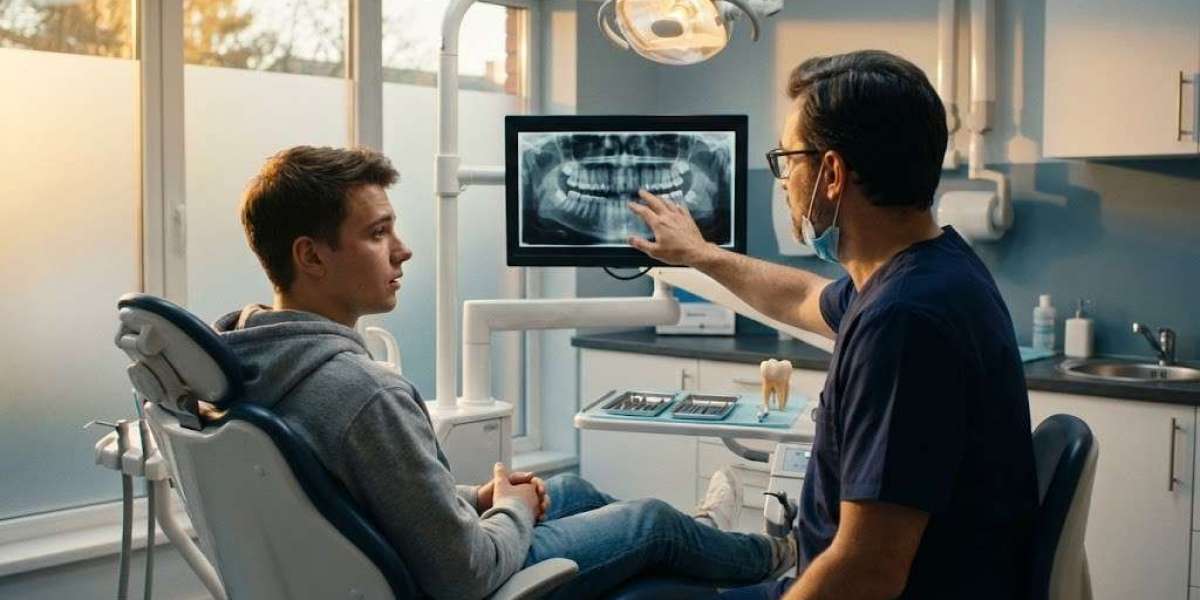
Radiographic imaging follows. These pictures expose what's hidden below the gums—impaction severity, nerve proximity, and available space.
Your dentist at Clementi will then recommend either continued monitoring or surgical removal based on these findings.
Understanding Impaction Varieties
Different impaction types require different approaches:
Soft tissue impaction: The tooth has partially visible crown, but gum tissue obstructs full eruption. Food accumulation is inevitable.
Partial bony impaction: Significant tooth structure remains within the jawbone. Surgical complexity increases.
Complete bony impaction: The entire tooth lies buried in bone. Requires advanced surgical techniques.
Greater impaction depth means more intricate procedures.
Dangers of Delay
Postponing treatment for problematic wisdom teeth rarely ends well. Conditions typically deteriorate rather than improve.
Bacterial infections can migrate to facial tissues or deeper structures. Neighboring teeth may suffer damage requiring extensive repair. Cystic growths can expand, threatening jaw integrity.
While observation is sometimes appropriate, when a dentist near Clementi advises extraction, trust that clinical evidence supports this guidance.
Empowering Your Decision
Start with candid dialogue with your dental professional. Critical questions include:
- What pathological changes are my wisdom teeth causing?
- What happens if I postpone intervention?
- What surgical risks should I understand?
- How extensive is the recovery period?
Comprehensive information enables confident choices.
Nervousness about surgery is natural and common. Explore sedation alternatives. Contemporary dental practice prioritizes patient comfort during these procedures.
Prevention Through Vigilance
The most effective strategy involves early identification of potential issues. Routine examinations allow your dentist at Clementi to track wisdom tooth development across time.
Most practitioners initiate monitoring during mid-adolescence, providing adequate runway for strategic planning if needed.
Early detection facilitates elective scheduling when circumstances are optimal, avoiding urgent intervention during painful crises.
Final Thoughts
Wisdom teeth management defies one-size-fits-all solutions. Some patients require extraction; others enjoy lifelong trouble-free function.
Monitor for warning signals: persistent discomfort, inflammatory swelling, recurrent infections, or positional shifts. Maintain regular professional evaluations to catch emerging problems.
Should concerns arise regarding your wisdom teeth, consult promptly with a dentist near Clementi for personalized assessment and recommendations.
Your dental anatomy is uniquely yours. Your wisdom teeth may serve you well indefinitely, or they may need removal. Either scenario is manageable when you're informed and supported by qualified dental expertise.